Thinking about buying acreage near Lincoln? It can be an exciting move, but it also comes with questions that do not usually come up in a typical in-town home purchase. If you want more space, flexibility, and room to build your plans, you also need to understand zoning, access, wells, septic systems, and financing before you commit. This guide will walk you through the key steps and practical considerations so you can move forward with more confidence. Let’s dive in.
Start With Jurisdiction
One of the first things to confirm is which local authority governs the property. Near Lincoln, that can change the rules in a big way.
Parcels inside Lincoln city limits and within the city’s 3-mile extraterritorial jurisdiction are subject to City of Lincoln zoning, while properties outside that area typically follow Lancaster County zoning. According to the City of Lincoln zoning information, two properties that appear very similar can have different rules for setbacks, uses, permits, and overlays.
That is why a quick map search is not enough. Before you write an offer, you want to verify whether the land is under city or county jurisdiction and ask whether any special overlay districts apply.
Check County Zoning Carefully
If the property is in Lancaster County, zoning details matter. The county’s AG district is intended to preserve farming and limit sprawl, while the AGR district is designed for lower-density acreage development in selected areas near paved roads and fire protection.
Under the county plan and zoning code, AG lots generally have a 20-acre minimum, while AGR lots generally have a 3-acre minimum. As noted in the Lancaster County zoning resolution, minimum lot size is only part of the picture because frontage, width, and setback rules still apply.
Ask About Long-Term Planning
If you are buying in a growth area near Lincoln, it is smart to look beyond the property itself. The city notes that overlays can include floodplain, airport-environs noise, Capitol Environs, and historic-preservation districts.
The broader planning framework also points to possible future annexation, utility expansion, tax changes, and school district changes in acreage areas. That does not mean the property is a bad buy, but it does mean you should understand what may change over time before making a long-term decision.
Review Water and Septic Early
For many acreage purchases, water and wastewater due diligence is where the biggest surprises show up. These issues can affect cost, financing, repairs, and even whether a closing stays on track.
In Lincoln and its 3-mile jurisdiction, the Lincoln-Lancaster County Health Department handles annual well inspections, water sampling for coliforms and nitrates, inspections of new or altered onsite wastewater systems, and well permits for construction or repair in that area. The department also requires property-transfer inspections for homes served by a private well or onsite wastewater system, with the seller hiring a permitted inspector.
If the property is outside that zone, state rules still matter. Nebraska’s onsite wastewater program requires registration for systems that are constructed, reconstructed, altered, modified, or otherwise changed, and any work must be done by a state-certified professional.
Well Testing Matters
Even if a property looks well maintained, do not assume the water system is problem-free. The CDC recommends testing private wells at least once a year for coliform bacteria, nitrates, total dissolved solids, and pH.
Nebraska also notes that many domestic wells drilled before September 9, 1993 were not required to be registered. That means missing paperwork on an older property does not automatically mean there is no well history, but it does mean you may need extra digging during due diligence.
Septic Rules Can Affect Development
If you are buying vacant land with plans to build, septic rules may shape what is possible. Nebraska states that if a development uses onsite wastewater on any lot under 3 acres, subdivision review is required before construction.
That is an important detail for buyers comparing small acreage tracts. A parcel that seems simple on paper may involve more review than expected depending on lot size and proposed wastewater service.
Confirm Legal Access and Road Requirements
Access is one of the most important issues in any acreage purchase. If a parcel is hard to reach, lacks legal access, or depends on an unclear shared drive arrangement, that can create problems for financing, building, and resale.
Lancaster County requires a driveway permit for access to a county road or public roadway in an unincorporated village or subdivision. The county reviews sight distance and drainage, the permit is free, and review usually takes about 10 working days.
That may sound straightforward, but it is still something to verify early. If you plan to improve access, move a driveway, or build a new home, this should be part of your closing checklist.
Easements Can Make or Break Buildability
A title review and survey are especially important with vacant acreage. This is often where easements, plat restrictions, liens, and other land-use issues surface.
Lancaster County notes a key point for some AG lots of 20 acres or more created before January 1, 2017. Frontage requirements may not apply, but if the parcel has no frontage, it is non-buildable unless there is a permanent access easement to a public street or private roadway, according to the county zoning resolution.
In other words, a parcel can look attractive on a map and still have a serious access issue. This is exactly why acreage buyers should treat legal access as a must-confirm item before closing.
Verify Outbuilding Rules Before You Plan a Shop or Barn
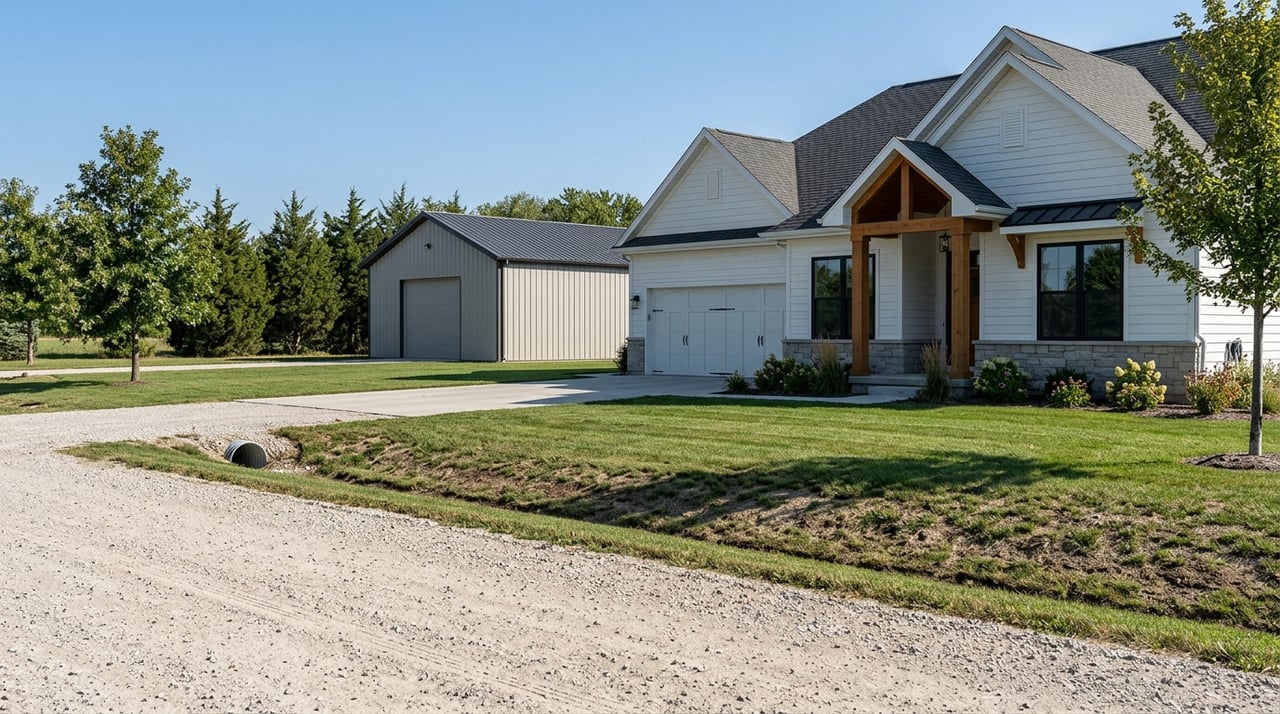
A lot of buyers are drawn to acreage because they want room for a shop, barn, shed, or additional storage. That is reasonable, but you should verify what is allowed on that specific tract before assuming your plans will work.
Lancaster County states that accessory buildings cannot be built until the main building has actually commenced, and they cannot be used as dwelling space. The county also ties allowable accessory-building size to tract size, as outlined in the county zoning code.
This matters if you want to build a shop before the house or if the property already has multiple detached structures. What works on one parcel may not be allowed on another.
Tell Your Lender About Every Structure
Outbuildings also affect financing and appraisal. Fannie Mae’s appraisal guidance distinguishes between minimal outbuildings, such as small barns or stables, and significant outbuildings, such as large barns or silos.
That is why it helps to tell your lender about every detached structure early in the process. Surprises during appraisal or underwriting can slow things down if the lender is learning about important improvements late.
Understand Acreage Financing Differences
Financing an acreage property is often more document-heavy than buying a standard suburban home. Wells, septic systems, detached structures, larger lot sizes, and zoning questions can all lead to extra underwriting review.
For some buyers, USDA financing may be worth exploring. The USDA property eligibility tool is address-based, and USDA single-family programs are intended for eligible rural areas and owner-occupied primary residences.
USDA materials also state that eligible borrowers may receive up to 100 percent financing through both the direct and guaranteed single-family programs, and guaranteed loans do not require a down payment. Income limits still apply, and the property must meet program rules.
USDA Is Usually Not for Investment Purchases
If you are buying acreage as a rental or other investment, USDA financing is usually not the best fit. The program’s owner-occupied primary residence requirement is the main reason.
That does not mean financing is impossible. It just means you should talk with a lender who understands rural and acreage transactions so you know early which loan options match the property and your plans.
Build Your Acreage Due Diligence Team
Acreage purchases usually go more smoothly when you line up the right professionals early. The highest-risk issues are usually not cosmetic. They tend to be jurisdiction, access, water, wastewater, and whether the improvements fit zoning and loan requirements.
Here are the people and offices worth contacting early in the process:
- Planning and zoning staff to verify city limits, ETJ status, county jurisdiction, and overlays.
- County engineer or survey staff to confirm driveway permit needs, road access, drainage, and shared-drive or easement questions.
- A title company or real estate attorney to review deeds, plats, easements, covenants, and liens.
- A permitted property-transfer inspector if the home uses a private well or onsite wastewater system in the applicable Lincoln-Lancaster area.
- A certified well contractor or water-testing provider to help review well records and test water quality.
- A certified onsite wastewater professional to evaluate system type, registration, and repair history.
- A lender familiar with rural properties to review loan fit, USDA eligibility, and appraisal treatment of outbuildings.
A Simple Pre-Closing Checklist
Before you close on acreage near Lincoln, make sure you can answer these questions clearly:
- Is the property in Lincoln, the 3-mile ETJ, or unincorporated Lancaster County?
- What zoning district applies, and what does it allow?
- Are there overlays that affect future use or improvements?
- Is there legal access to a public road?
- Will a driveway permit be needed?
- Is the well tested, documented, and functioning properly?
- Is the septic system registered, inspected, and in acceptable condition?
- Do existing outbuildings match zoning and lender expectations?
- Does the property fit the loan program you plan to use?
If you can answer those questions before closing, you are in a much stronger position to avoid expensive surprises later.
Buying acreage near Lincoln can be a great move when you go in with clear information and the right support. If you want practical guidance on land, rural homes, or acreage opportunities in Lancaster County and nearby areas, Connie Reddish can help you sort through the details and move forward with confidence.
FAQs
What zoning should you check when buying acreage near Lincoln?
- You should first confirm whether the property is in Lincoln city limits, the 3-mile ETJ, or Lancaster County, because zoning rules and permit requirements can differ depending on jurisdiction.
What water and septic inspections matter for Lincoln-area acreage?
- If a home is served by a private well or onsite wastewater system, you should verify inspection requirements, transfer inspection needs, water testing, and whether the septic system has been properly registered or modified under state rules.
What access issue can make Lancaster County acreage non-buildable?
- A parcel without required frontage may be non-buildable unless it has a permanent access easement to a public street or private roadway, so legal access should always be confirmed through title and survey review.
What should you know about building a shop or barn on acreage in Lancaster County?
- Lancaster County says accessory buildings cannot be built until the main building has commenced, cannot be used as dwelling space, and may be limited in size based on tract size.
What financing option may work for eligible rural acreage buyers near Lincoln?
- USDA single-family financing may be an option for eligible buyers purchasing an owner-occupied primary residence in a qualifying rural area, but property eligibility and income limits still apply.